Football Families: The Reynas

I think I got the best of both of them.

“Dad, Gio is the best player here by far”, Jack said to Claudio while watching his younger brother trying out his basketball skills for a local team.

“He wasn’t jealous about anything”, the father will later remember. “He absolutely thought Gio was incredible.”

Just a few months later, barely 13-year-old Jack Reyna would die of brain cancer leaving his nine-year-old brother Giovanni as the oldest of – from then on – three children of former United States international footballers Danielle Egan Reyna and Claudio Reyna.

The evening after his older brother died, Gio reportedly told his mother that he was never going to be a good soccer player now. He felt it was Jack, and not any of the parents, who had taught him everything.

Giovanni has recently got himself a tattoo on his right arm. It reads: Love Jack.

BASKETBALL LOVER

Giovanni Reyna was born in November 2002 in north-east England when his father Claudio – the first American to captain a European football club while on loan at Wolfsburg from Bayer Leverkusen in late 1990s and then U.S. Men’s National Soccer Team skipper at the 2006 World Cup – was playing for Sunderland.

Just over four years later, via a three-and-a-half-year stint at Manchester City, the family moved back across the big pond where Reyna senior saw out his playing days at New York Red Bulls.

Meanwhile, his second son quickly started to show his own footballing potential.

“He used to dominate U9s soccer in the park, when he was five“, Claudio recalled of little Gio‘s first steps with the ball at his feet.

In a country that seems to strongly believe in late specialisation, however, it was not until Giovanni was nine years of age himself when he joined his first football club. He would stay at New York Soccer Club for two years before moving to New York City FC.

As a kid, he would play different sports, including American football and tennis.

His favourite one, alongside football and similar to Lautaro Martinez, was basketball.

“In the end, it was always going to be football, but I also played really competitive basketball in New York City until I was 12 or 13″, young Reyna has revealed.

“After that, I had to stop, as this was obviously my priority, my main option, and my passion.

“I really love basketball though, and still follow it now. I try to watch as many games as I can […] Basketball, besides soccer, is my next love.”

BLEND OF PARENTS

If Giovanni Reyna indeed has football in his blood, it is not down just to his father.

His mother, Danielle Egan Reyna, also played football professionally and even made six apperances – all starts – for the U.S. Women’s National Soccer Team back in 1993. They were world champions at the time.

Her supremely talented son could be regarded as a blend of his parents’ footballing abilities.

“I think my parents say I got the best of both of them, to be honest, because my dad was more of a technical, combining player, good on the ball, and with good technique, while my mum was more of a runner“, Gio has said himself.

“I think I can run pretty well too, but I also have a good technique and a good combination.

“I think I got the best of both of them, but I can still always work and improve on both of them.”

As with Lilian Thuram and perhaps contrary to common expectations, neither Danielle nor Claudio seem to have ever put any pressure on any of their children to pursue a sporting and let alone football career.

“They try to keep me grounded, obviously, because there is a lot coming at me right now”, Giovanni admitted at the start of this calendar year.

“I know that though, and not only them, but a lot of other people tell me that. It’s still a long way to go, and I know there’s still a lot of work.

“They obviously say they’re proud of me and they love what I’m doing over here.”

Claudio Reyna claims he never really played football with Gio even in the family garden.

This was Jack’s domain.

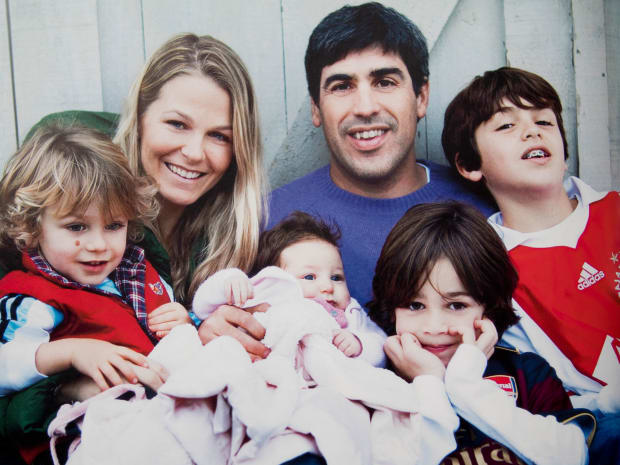
In the picture: the Reyna family before the death of Jack, Giovanni is wearing an Arsenal shirt (found here)
How It All Began: Kai Havertz

He always fought like a lion and was as quick as a flash.

“Four? You can forget it”, Dirk Morfeld remained firm on the club’s principles.

But the late Gerd-Willi Kämmerling kept insisting.

“Take one look at him”, the long-standing member of the same club told his younger colleague. “He is quick, he is good on the ball.”

RECOGNITION

In 2018, Sportverein Alemannia 1916 e. V. Mariadorf, to give the club their full name, were awarded an official certificate from the German Football Association.

It read: […] In recognition of this outstanding work developing young talent, the German Football Association award this distinction, which is combined with a grant of 6,875 to the youth department [of the club].

This is how the governing body of German football appreciate the influence of clubs, who made a valuable contribution to the development of an up-and-coming young player.

No matter at what age the player was registered with a club.

The Fritz Walter Medals, awarded to the best youth footballers in Germany since 2005, recognise not just the top football prodigies in the country, but also the clubs that played their part in the remarkable development of the most outstanding talents.

So when Kai Havertz received his gold medal, named after the legendary 1954 World Cup-winning captain, as the best under-19 footballer in Germany during the 2017/18 season, the club where he started his career were also rewarded*.

Even though the current Bundesliga star’s very first coach eventually abandoned his golden rule.

LIKE A FLASH

Kai Havertz was born in the historic city of Aachen in the North Rhine-Westphalia region of West Germany and grew up less than 15 kilometres north, in the town of Alsdorf.

This is where he was first seen with a football at his feet by Kämmerling, these days regarded as the real discoverer of the now Germany international’s talent.

There was only one problem.

Local club Alemannia Mariadorf would not allow children younger than five years of age to train with them. Kai was four when Kämmerling took notice of him back in 2003.

Did the club feel four-year-olds were simply too young to train football?

Possibly.

More importantly, though, there were simply too many four-year-old kids – or parents of four-year-old kids, rather – who wanted to join the club.

He would fit perfectly in the team“, Kämmerling, who worked at his beloved club in various capacities, told Morfeld, himself coaching the youngest age group at Mariadorf at the time.

Despite the initial reluctance to disobey the rule, Morfeld ended up making an exception for little Havertz.

He would not regret it.

“I allowed Kai to join in training with us and thought: ‘unbelievable‘”, the current Bayer Leverkusen playmaker’s first coach, who still works at Alemannia today, remembers.

The little Havertz was never the best player on the team and understandably so. He would train with kids a year or even two years older than him. As with Erling Haaland, he was also pretty small (and would not significantly grow until the age of about 15-16).

However, Kai would still stand out. More than anything, with his will and drive.

“He always only wanted to play football and never let himself get distracted, did no silly things, was always single-minded“, Morfeld explained.

This makes the difference, I thought it already then.

“He always fought like a lion and was as quick as a flash.

“He could strike the ball well, was modest and always polite.”

GARDEN GNOMES

Apart from Kämmerling and Morfeld, it seems the now 20-year-old has a lot to thank his maternal grandfather for.

Richard Weidenhaupt-Pelzer was once a footballer himself, plying his trade for Dutch Roda Kerkrade.

He was also probably the first person to play football with little Kai and would allow the boy to hone his accuracy by knocking garden gnomes off a wall in the family garden.

(Note: Kai Havertz has an older sister and an older brother. His mother is a lawyer and his father works as a policeman.)

ONE EXCEPTION

Similar to Eduardo Camavinga, Havertz stayed at his local club for several years before making a move to the other Alemannia. He spent just a single season at the Aachen-based club, though, and joined Bayer Leverkusen at the age of 11.

(He scored a hat-trick against Leverkusen for Aachen while already playing for their U12s.)

Seven years earlier in his home town, his soon-to-be first coach tended to remain firm on the principles of a local football club.

Good job he did make that one exception.

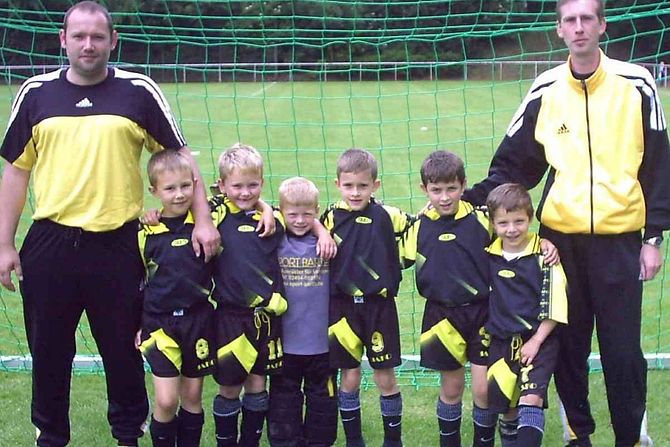
In the picture: Kai Havertz was the smallest player on the team at Alemannia Mariadorf, Dirk Morfeld stands on the left (found here)

* In total, Alemannia Mariadorf have already received around €30,000 for the fact Havertz was once on their books, including a training compensation from Bayer Leverkusen and further money from the German Football Association once the player made his debut for the senior national team as well as won the Fritz Walter Silver Medal at the under-17 level. The income has so far been reinvested – among other things – into redeveloping the club’s changing rooms. Further injection of finance is expected when Leverkusen sell Havertz in the future.

Foundation Phase: Swansea City

The club academy’s former head of coaching outlines the importance of the mental aspect and mentoring of coaches in player development.

It could be argued that no club in British football have had a more defined playing style in recent times than Swansea City – despite Roberto Martínez back in the late 2000s remaining the last head coach to stay at the Liberty Stadium for a spell of over two years!

With their seven-year-long stay in the Premier League having come to an end two seasons ago, Swansea have since found themselves in the top half of the Championship table but so far short of fulfilling their ambition of a swift return to the top-flight.

Under-17 World Cup winner with England Steve Cooper replaced Brighton-bound Graham Potter as head coach last summer and the team have featured a noticeable number of youngsters this campaign.

Cooper’s former charges in Conor Gallagher, Rhian Brewster and Marc Guehi – all part of England’s World Cup success at youth level back in 2017 – moved to South Wales on loan deals in January.

Meanwhile, the club academy’s youth products such as Ben Cabango, Brandon Cooper (both also born in 2000), Liam Cullen (born in 1999), Joe Rodon (1997) and Connor Roberts (1995) have all been part of the first-team set-up.

Curiously, centre back Rodon and striker Cullen have both been at the club since the age of eight whereas Cooper – another central defender – joined their academy aged six.

MENTALITY

“They are all hard-working individuals who are strong believers in their own ability“, ex-head of coaching at the Swansea City Academy Roy Thomas told Breakthrough.

“All four [including Roberts] have good personalities and are good guys.

“They are all well-rounded and have always helped me when I asked them, for example attending foundation and youth phase sessions at the academy to support young players.”

Thomas, who oversaw the club’s academy achieving the Elite Player Performance Plan (EPPP) Category 1 status in recent years, regards mentality as the most underestimated aspect of coaching.

“The personality of a player is sometimes overlooked by the recruitment system with scouts looking at physical attributes of players rather than the person”, he added.

“I believe this is as important or [even] more important than natural talent.”

From his experience, approximately 10% of a squad of 18 under-9 players will go on to obtain an under-18 scholarship.

“It is difficult to estimate”, Thomas said when asked whether there were any particular psychological or social traits he would deem as crucial.

“But one thing I look for is the readiness to improve and get better.

“[I like] A young player who sees a problem as a challenge rather than a negative.”

Thomas, who had previously worked as Technical Director for Football Federation of Australia, lists factors such as coaching, parents, home environment, school, peers and outside influences, girlfriends, finance and luck as all having a potential input into player development.

As for coaching, in his view, there is one particular thing that should always be remembered.

“They [the players] like making friends and learning new things”, he says. “Most important [is that] they are having fun.”

MENTORING

In his time at Swansea, whom he joined back in 2012, Thomas put particular emphasis on the development of not just exciting young players but also high-quality youth coaches who would be in line with the club’s philosophy and support every youngster on their journey.

While players carried out their personal development plans, coaches themselves were going through their own specific mentoring programme.

“The coaching philosophy in particular has always looked at producing exciting players while also allowing them to become more independent decision-makers“, Thomas also told Breakthrough.

“All sessions provide on average 80% ball-rolling time, with less interventions from the coaches.”

As far as the foundation phase is concerned, it seems it is all about providing players with a wide variety of technical elements.

“The foundation phase coaching curriculum, in which I have been responsible for, focuses on repetition“, Thomas added.

“Every practice should include [1] striking and controlling the ball from and over short and longer distances, [2] attacking and defending as an individual, [3] crossing, finishing and scoring goals, [4] dribbling and running with the ball.

“In particular, [there should be] various volleying of the ball [such as] half-, side- and full-volleys, longer and shorter range passing, bending, dipping, curling the ball; 1v1, 2v1, 2v2 [games] with keepers, protecting the ball.

“All these, I believe, are extremely important in a player’s development.

“Goalkeeping [should also be] included as much as possible.

“All sessions must be safe, fun and have targets while being competitive with high tempo and realism.

But having the right coaches and staff is vital.”

From Martínez, through Brendan Rodgers and Michael Laudrup, to Potter and Cooper coaches have always been key to Swansea City’s rise, success and destiny.

At Academy level – and their foundation phase – it appears to be no different.

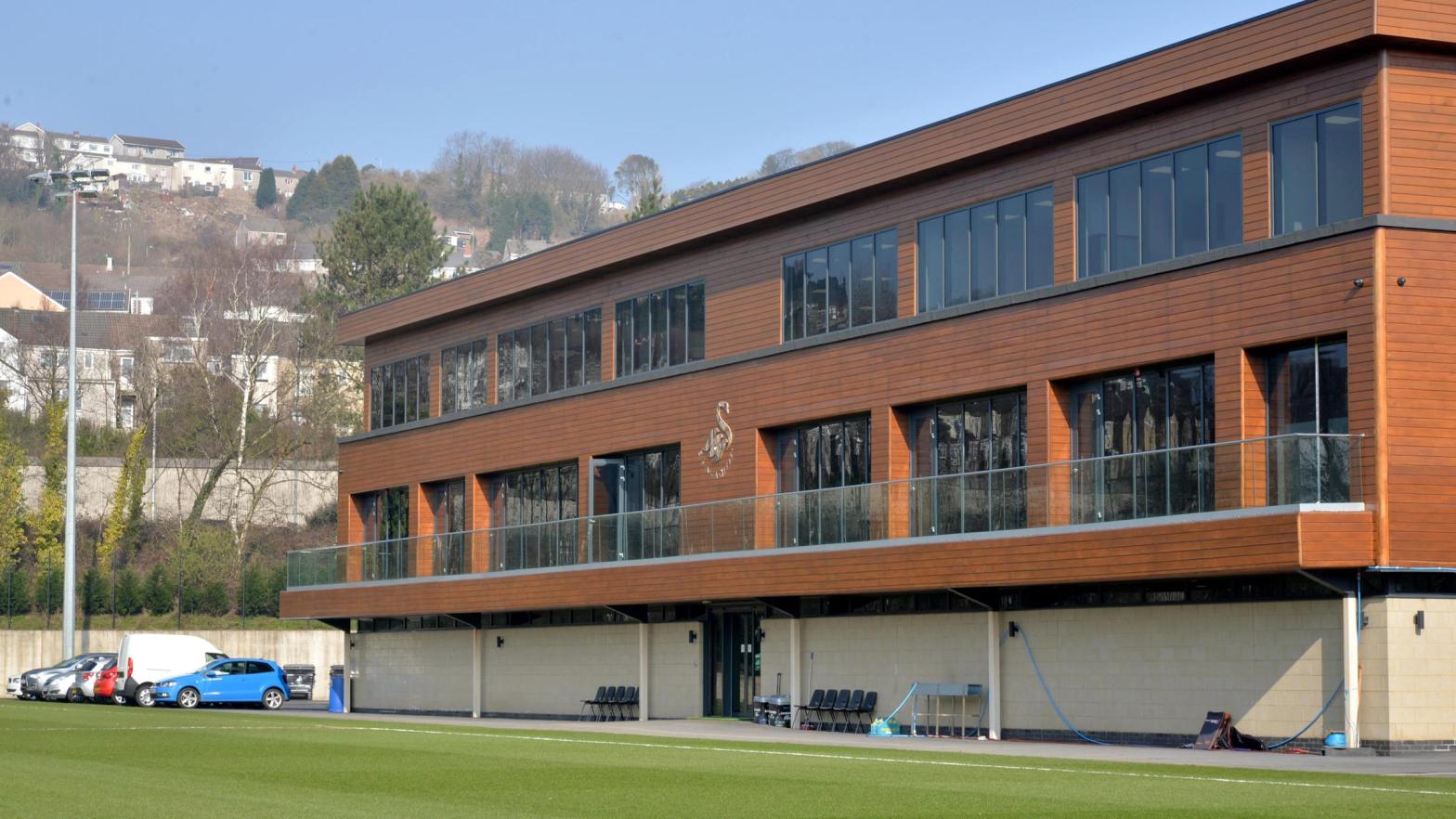
In the picture: Swansea City opened their new academy training complex facilities back at the start of the 2013/14 season (found here)

My Research: So Far (Part 4)

Since the start of 2020, I have been monitoring the progress of young players in Europe’s top five leagues. The coronavirus pandemic has provided an opportunity to sum up some of the very first findings.

Part 1: The Most Influential Under-23s

Part 2: The Most Influential Teenagers

Part 3: Nationalities of Most Influential Under-23s

In part four, I have looked at nationalities of teenagers, i.e. under-20 players (born in 2000 or later), who appear in games, i.e. start or come on as substitutes.

As for players holding more than one passport, their nationality was decided upon the country they have most recently represented or currently remain eligible for at international level. English, Scottish, Welsh and Northern Irish nationalities are treated separately.

Let’s take a look at starts, first.

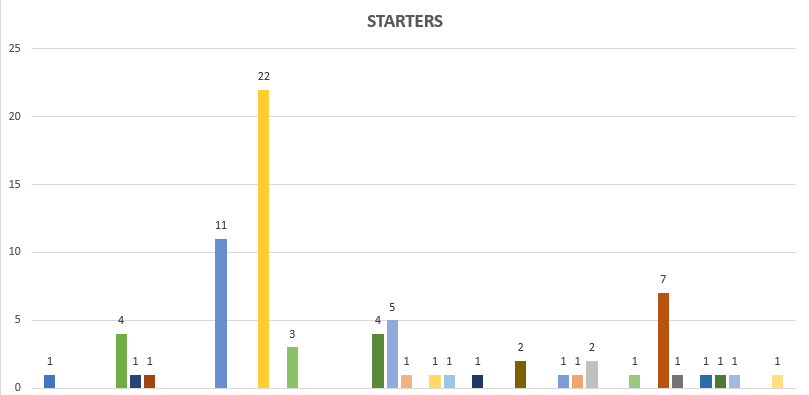
Under-20 players of 24 different nationalities have started games in Europe’s top five leagues so far in 2020.

The cumulative number of under-20 starters per nationality across Europe’s top five leagues so far in 2020.

France is expectedly leading the way with 22 different teenagers of its nationality having started at least one Ligue 1 match so far in 2020 – double the number of second-placed England (11, bar Jadon Sancho all of which play in the Premier League).

Spain is third with seven starters (Eric García being the only one from outside of La Liga).

Italy has five (with Moise Kean playing abroad) while Brazil (in three different leagues) and Ireland are on four each. Germany has three.

The Netherlands and Portugal are on two each.

Albania, Cameroon, Canada, Ivory Coast, Japan, Luxembourg, Mali, Norway, Poland, Serbia, Sweden, Togo, Turkey, the United States and Wales have one.

The cumulative number of starts made by under-20 players per nationality across Europe’s top five leagues so far in 2020.

The top four remain the same when it comes to the total number of starts made by under-20 players of their respective nationalities across Europe’s top five leagues so far in 2020.

France – with 75 starts – is comfortably ahead of England (43) that itself has a significant advantage over third-placed Spain (16) and fourth-placed Italy (11).

Albania (all courtesy of Marash Kumbulla), Brazil and Canada (all thanks to Alphonso Davies) all follow with eight starts each. Germany has seven.

Ireland, Luxembourg (all down to Leandro Martins), Mali (100% by El Bilal Touré), Portugal and Turkey (with every start made by Ozan Kabak) are all on six.

Ivory Coast, Norway and Sweden have five. Japan and Serbia – four. The Netherlands, Poland, the United States and Wales – three. Cameroon and Togo – one.

Let’s now move onto appearance makers, i.e. starters and substitutes.

The cumulative number of under-20 appearance makers per nationality across Europe’s top five leagues so far in 2020.

In total, under-20 players of 32 different nationalities have appeared on the pitch at least once across Europe’s top five leagues so far in 2020.

France has 29 different teenage appearance makers with all but one playing domestically.

England is yet again second with 19. Spain is third on 15.

Italy then has nine, ahead of Germany on seven.

Brazil, Ireland and the United States have four.

Albania, Cameroon, Ivory Coast, the Netherlands, Portugal, Turkey and Wales – two.

Canada, Estonia, Finland, Gambia, Ghana, Guinea-Bissau, Iceland, Japan, Luxembourg, Mali, Mexico, Norway, Poland, Serbia, South Korea, Sweden and Togo – one.

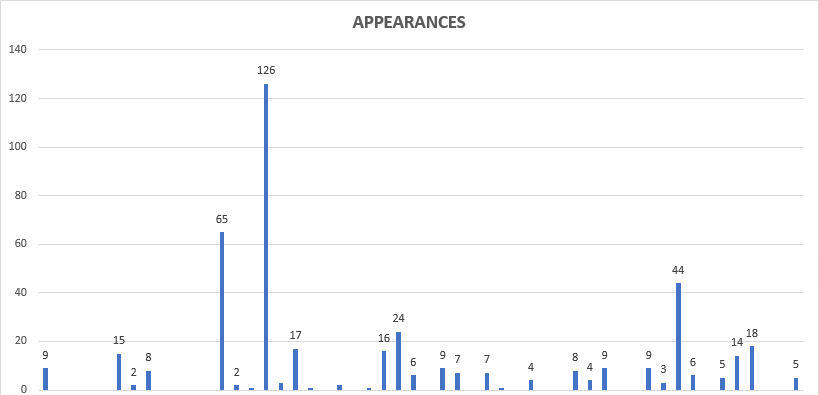
The cumulative number of appearances made by under-20 players per nationality across Europe’s top five leagues so far in 2020.

As far as the cumulative number of starts and substitute appearances made by under-20 players across Europe’s top five leagues so far in 2020 is concerned, France is again top on 126, again almost double the number of England (65).

Spain is third on 44 with Italy fourth on 24.

Perhaps surprisingly, the United States come fifth (18), just ahead of Germany (17), Ireland (16), Brazil (15) and Turkey (14).

Albania, Japan (all by Takefusa Kubo), Portugal and Serbia (all down to Dušan Vlahović) are then all also close to double figures on nine each.

Canada (again thanks to Davies) and Norway (all by Erling Haaland) have eight.

Luxembourg and Mali are on seven; Ivory Coast and Sweden – six; Togo and Wales – five; the Netherlands and Poland – four; Gambia and South Korea – three; Cameroon, Estonia and Guinea-Bissau – two; Finland, Ghana, Iceland and Mexico – one.

Look out for part 5 of my research next month.

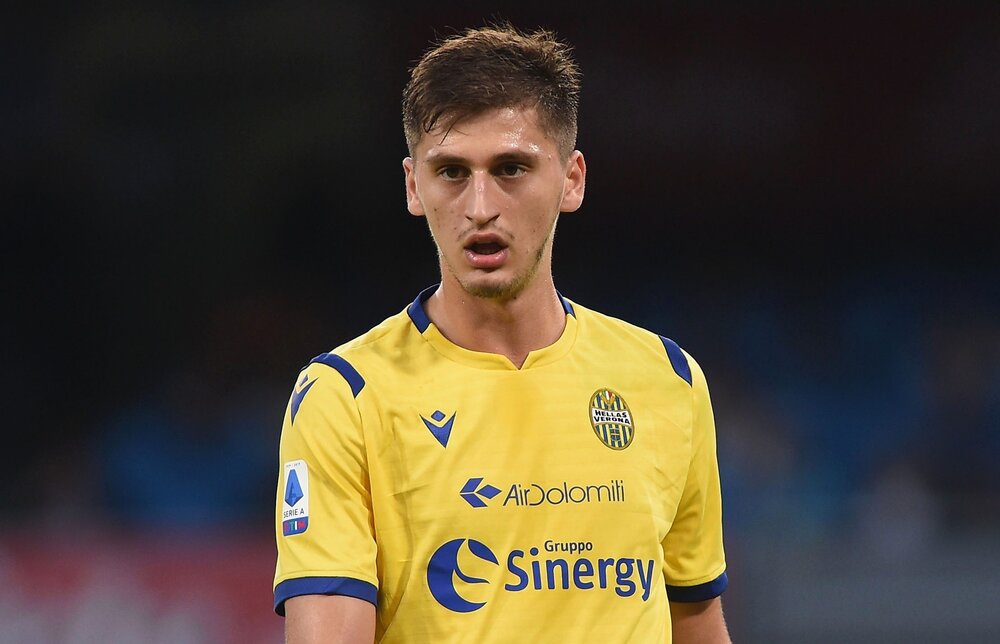
In the picture: Italy-born Albania international Marash Kumbulla has already made eight starts for Hellas Verona in 2020 (found here)

Design a site like this with WordPress.com
Get started