Foundation Phase: Shrewsbury Town

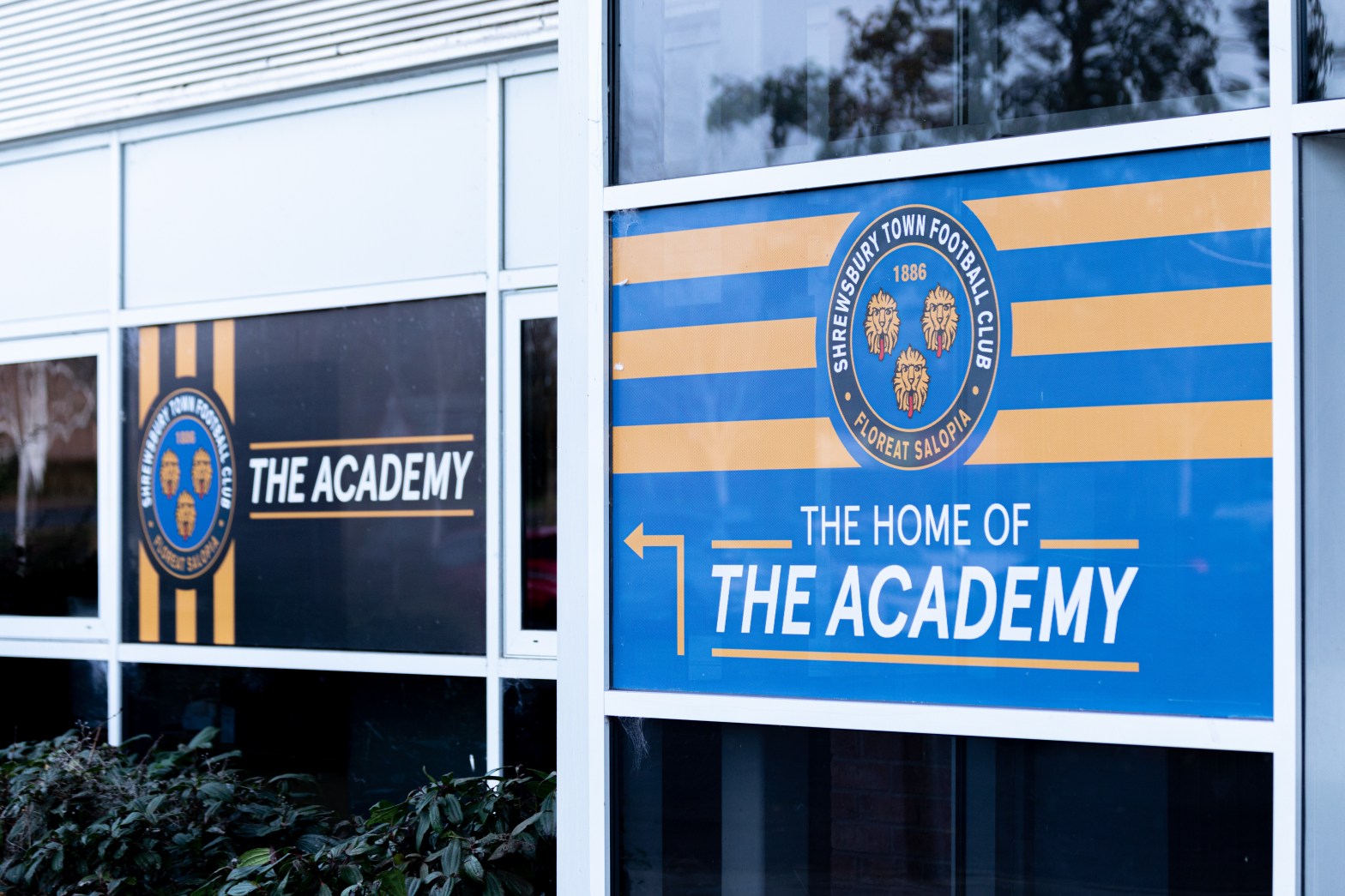
I have recently spent a week at the Shrewsbury Town Academy.

Here are some of the outtakes.

The Shrewsbury Town Academy run their foundation development phase down from the U9 up to the U12 age category. Their FDP has three objectives:

  1. Production of players to youth development phase.
  2. Developing a love of the game.
  3. Developing a love for the club.

The children train three times a week – every Wednesday, Thursday and Friday (3 x 90 min) – and play a game at the weekend (4 x 20 min). Twice a week they train in a cage and only on Fridays they train on a bigger pitch, where they finish their session with a 7v7/9v9 match (U9s together with U10s and U11s together with U12s).

At Shrewsbury, across all age groups, they pay a huge emphasis on developing the weaker foot. They also place focus on the concept of disguised passing.

As far as a session plan is concerned, they tend to use interleaving, so coaches first provide their players with an exercise, then a game, then another exercise, another game and so on.

All players also have their individual learning plans with three targets per player for a given time. Coaches tend to focus their attention on three or four players per week in accordance with their ILPs.

Credit for the picture in use goes to Krystian Lamberski

Young Teams of 2021/22

I provide tips as to which teams are particularly worth following in the 2021/22 season in Europe’s top five leagues.

Barcelona

The Catalan giants may be going through horrendous off-the-field issues. As Albert Einstein put it, however, in the middle of difficulty lies opportunity. And, in the case of Barcelona, particularly for young players. Ronald Koeman has already used 12 under-23s so far this campaign, including last season’s revelation in Pedri, the fit-again Ansu Fati and the incredibly talented Gavi. Meanwhile, Sergiño Dest looks a guaranteed starter at full-back while Eric García, Ronald Araújo and Óscar Mingueza all compete for a starting berth at the heart of the defence. Add the likes of Nico González, Yusuf Demir, Riqui Puig and Álex Balde onto the list and Barça are definitely the La Liga young team to watch this term.

Bayer Leverkusen

Not necessarily Borussia Dortmund’s, but definitely Bayer Leverkusen’s starting line-up is full of youngsters at the start of the new Bundesliga campaign. Beginning at the back, summer signings Mitchel Bakker and Odilon Kossounou as well as last January arrival Jeremie Frimpong have all quickly established themselves in the first XI. Meanwhile, another new addition in Piero Hincapié has also already made his full German top-flight debut. Further up the pitch, Moussa Diaby has continued where he left off last campaign while fit-again Paulinho and one more summer signing in Amine Adli both provide competition for places in the forward positions. Oh, and I have not even mentioned the incredible Florian Wirtz (pictured above, source: Bayer 04 Leverkusen/Neil Baynes). Fancy a Bundesliga game involving lots of young players this season? Make sure it involves Leverkusen.

Norwich City

The Premier League remains the hardest competition for young players to break into. And while the likes of Chelsea, Arsenal and Crystal Palace all deserve a mention, it is the yo-yo side Norwich City who are the young team to watch in the English top-flight this term. As with Bayer Leverkusen, it starts at the back. Max Aarons is still an ever-present. Meanwhile, the on-loan duo of Ozan Kabak and Brandon Williams as well as Irish senior international Andrew Omobamidele all compete for places across the defensive line. In midfield, the superbly-skilful Billy Gilmour is picking up the necessary experience that will hopefully enable him to return and remain at Chelsea next season. Finally, in the last third of the pitch, another Republic of Ireland international Adam Idah, American Joshua Sargent and Greek hope for the future Christos Tzolis are all expected to provide support for veteran striker Teemu Pukki.

Rennes

Considering the nature of the French league system, you could easily make a similar list consisting of solely Ligue 1 teams. I have decided to go for Rennes, though, and it has nothing to do with the fact this club has just sold the supremely-talented Eduardo Camavinga to Real Madrid. Excluding the still just 18-year-old midfielder, coach Bruno Genesio has already fielded 11 under-23s this campaign, including eight teenagers. The Euro 2020 star Jérémy Doku, who has recently struggled for fitness, remains the biggest prospect within the side, although Ghanaian Kamaldeen Sulemana has also made an impressive start to life in one of Europe’s top five league competitions. At the back, another summer signing Loïc Badé as well as academy graduates Warmed Omari, Lorenz Assignon and last season’s regular Adrien Truffert all compete for places. In midfield, Lesley Ugochukwu has already made four Ligue 1 starts while Matthis Abline and Mathys Tel (the only player born in 2005 to make an appearance in one of Europe’s top five leagues so far this season) are particularly highly regarded. Watch out for a new Camavinga.

Spezia

Last year’s newly-promoted side were unlucky not to get a mention at the start of the 2020/21 season, having eventually used nine under-23s over the course of the campaign. Now coached by ex-Barcelona and Paris Saint-Germain midfielder Thiago Motta, the tendency has remained. Bulgarian centre back Petko Hristov is a regular starter while the left-footed Janis Antiste has scored his first goal after a summer move from Toulouse, winning a starting berth up front or out wide. Moreover, on-loan duo of Ebrima Colley and Eddie Salcedo as well as an international trio of Israel senior international Suf Podgoreanu, Slovak striker David Strelec and Sweden under-21 international Aimar Sher all provide competition for places for a Serie A young team to watch this time around.

My Research: EURO 2020

As many as 72 under-23 players, i.e. on average three per team, featured at the EURO 2020 finals.

Players born in year 1998 or later – also eligible to play at this year’s under-21 European Championships – scored a total of 10 goals and provided 14 assists at the senior tournament, which represents a slight upgrade on EURO 2016.

Five years ago, at the first 24-team European Championships finals, under-23s scored a total of no fewer than 13 goals, but provided just eight assists.

This time, the most influential under-23 players were:

  • Mikkel Damsgaard (2 goals, 1 assist);
  • Ferran Torres (2 goals, 1 assist);
  • Dani Olmo (3 assists);
  • Kai Havertz (2 goals);
  • Manuel Locatelli (2 goals);
  • Dejan Kulusevski (2 assists);
  • Alexander Isak (2 assists);
  • Donyell Malen (2 assists).

Furthermore, Christoph Baumgartner and András Schäfer also bagged a goal each while Mason Mount, Kylian Mbappé and Kamil Jóźwiak all provided an assist.

Interestingly, over a third (29) of under-23 players at EURO 2020 were born in year 1999:

  • 1998 – 15 players;
  • 1999 – 29;
  • 2000 – 11;
  • 2001 – 7;
  • 2002 – 7;
  • 2003 – 3.

In terms of position on the pitch, Gianluigi Donnarumma and Matvey Safonov were the only two goalkeepers to make at least one appearance:

  • goalkeepers – 2;
  • centre backs – 9;
  • full-backs – 10;
  • centre midfielders – 14;
  • attacking midfielders – 13;
  • wingers – 14;
  • forwards – 10.

As far as Relative Age Effect is concerned, there were no surprises:

  • I quarter of year – 17 players;
  • II quarter – 25;
  • III – 16;
  • IV – 14.

Team-wise, England had the most under-23s, who made at least one appearance:

  • England – 7 players;
  • Netherlands – 6;
  • Poland – 5;
  • Italy, Spain, Turkey and Wales – 4;
  • Croatia, Czech Republic, Denmark, Hungary, North Macedonia, Russia, Sweden and Ukraine – 3;
  • Finland, France, Germany, Portugal and Scotland – 2;
  • Austria, Belgium, Slovakia and Switzerland – 1.

Young English players also made, on average, the highest number of starts (2.71), just ahead of Spain (2.67). Meanwhile, Dutch players made the highest number of appearances (3.75), ahead of England (3.71), Poland (3.67) and Spain (3.33).

In contrast, no Finnish, Slovakian or Swiss under-23 player made a start during the tournament.

Finally, there were 17 under-20 players who featured at least once at the EURO 2020 finals, making a total of 50 appearances (27 starts and 23 substitute cameos). In comparison, there were just 11 teenagers at the previous edition of the European Championships, totalling 17 starts and 21 substitute appearances (note: back then only three subs were allowed).

The youngest starters this time around were:

  • Pedri (6 starts);
  • Ilia Zabarnyi (5);
  • Jérémy Doku (2);
  • Ryan Gravenberch (1);
  • Joško Gvardiol (4);
  • Bukayo Saka (3 + 1 sub app);
  • Jurriën Timber (1 + 2 sub apps);
  • Billy Gilmour (1);
  • Neco Williams (1 + 2 sub apps);
  • Eric García (3).

What is more, several players also made only substitute appearances, including 17-year-old Kacper Kozłowski, who became the youngest player in the history of the EURO finals, just after his peer Jude Bellingham had broken the same record:

  • Kacper Kozłowski (2 sub apps);
  • Jude Bellingham (3);
  • Jamal Musiala (2);
  • Adam Hložek (4);
  • Tomáš Suslov (2);
  • Maksim Mukhin (3);
  • Nathan Patterson (1).

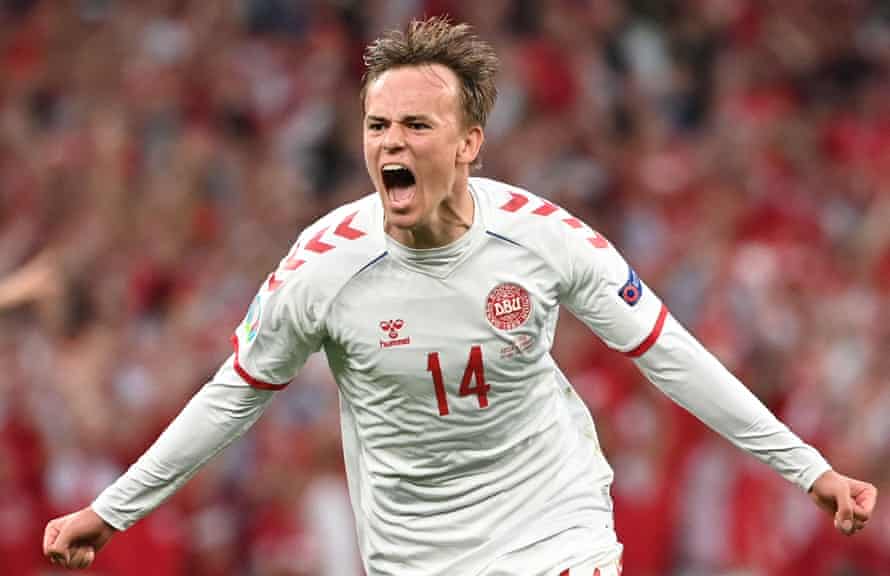
In the picture (credit: Jonathan Nackstrand/AFP/Getty Images): Mikkel Damsgaard was the youngest both goalscorer and assist provider at EURO 2020

Where Are They: Euro U21 winners

I have analysed the under-21 European Championships last five winning squads.

KEY FINDINGS:

  • Two of the 2019 edition winners started Spain’s first 2022 World Cup qualifying game against Greece, with further two making the matchday squad.
  • Serge Gnabry is the only 2017 edition winner who was called up to the Germany senior squad at the start of the 2022 World Cup qualifying campaign.
  • Four of the 2015 edition winners started Sweden’s first 2022 World Cup qualifying encounter against Georgia, with another one coming off the bench.
  • The 2013 edition winners include the likes of David de Gea, Iñigo Martínez, Dani Carvajal, Koke, Thiago Alcântara, Sergio Canales, Isco and Álvaro Morata.
  • Among the 2011 edition winners are César Azpilicueta, Javi Martínez, Juan Mata, David de Gea and Thiago Alcântara, but also the likes of Bojan Krkić and Diego Capel.

Spain 2019

Every single player of the 23-man Spanish squad that triumphed in Italy less than two years ago is now with a top-flight club, home or abroad. However, a lot of them have rather struggled to make a significant impact in senior football. Dani Olmo and Mikel Oyarzabal are the most obvious success stories with Fabián Ruiz and Mikel Merino having also progressed to the seniors.

However, Dani Ceballos has been inconsistent on loan at Arsenal while Pablo Fornals has hardly taken the Premier League by storm, to say the least, since his big-money move to West Ham. Jesús Vallejo, Unai Núñez and Martín Aguirregabiria, who all started the 2-1 final victory over Germany back in 2019, have neither cemented their places at La Liga level. Meanwhile, Junior Firpo and Marc Roca are only squad players at Barcelona and Bayern Munich respectively.

Things look a bit brighter up front, with both Borja Mayoral and Rafa Mir having recently put on their goalscoring boots on their respective loans at Roma and Huesca. Perhaps the biggest winner of the 2019 Spanish crop is goalkeeper Unai Simón, though. The Athletic Bilbao shot-stopper has rather surprisingly displaced both David de Gea and Kepa Arrizabalga in Luis Enrique’s senior side despite having been understudy to Deportivo Alavés Antonio Sivera at youth level. The latter has not yet made a league appearances this season.

Germany 2017

All but two players of the 23-man Germany squad that triumphed in Poland less than four years ago are now with a top-flight club, home or abroad. However, only Club World Cup winner Serge Gnabry is currently a senior international, even though Paris Saint-Germain’s Thilo Kehrer, who did not play in the 1-0 final victory over Spain back in 2017, would have been in contention for the latest squad list had he not been injured.

Others have endured rather mixed fortunes. Maximilian Arnold has done well at high-flying Wolfsburg this season. Nadiem Amiri has impressed, although perhaps not consistently enough, at Bayer Leverkusen. Marc Oliver-Kempf is an important part of the revelation-package VfB Stuttgart. Mahmoud Dahoud, like Amiri, has even progressed into the seniors despite having not really won a starting berth at Borussia Dortmund.

On the other hand, Max Meyer is back in the Bundesliga with Cologne after a hugely disappointing spell at Crystal Palace. Maximilian Philipp has not really found his goalscoring form since 2017. Finally, the then match winner Mitchel Weiser is now usually a substitute at Leverkusen.

Sweden 2015

Perhaps not Spain – the ridiculously talented age group below, aside – nor Germany, but the Swedish under-21 European Champions have been the biggest success story of late. Proof?

Compare two defensive back four.

Augustinsson – Helander – Milošević – Lindelöf

Above is the one that started, and kept a clean sheet, Sweden’s final victory over Portugal in Czech Republic back in 2015. Below is the one that started Sweden’s first 2022 World Cup qualifying game against Georgia earlier this week.

AugustinssonHelanderLindelöf – Lustig

And that’s not all.

Kristoffer Olsson, who was the youngest player in the 2015 travelling squad and did not play in the final, was also on the pitch from the start against Georgia while Robin Quaison came off the bench in the second half, as he did less than six years ago for under-21s against Portugal.

In fact, even if you expected more from star striker John Guidetti in recent years, every single Sweden player that began the U21 final back in 2015, has since made at least one appearance for the seniors.

Spain 2013

If Sweden’s 2015 triumph was not a fluke then, the title Spain won two years earlier certainly was not one either. No less than 17 out of 23 Spanish players who travelled to Israel back in 2013 went on to win at least one senior cap.

David de Gea, Iñigo Martínez, Thiago – who scored a hat-trick in the 4-2 final victory over Italy – Koke and Álvaro Morata are full internationals to this day while Sergio Canales has also earned himself a place in the side under Luis Enrique.

There is also a sad thing about this group, however. Midfielder Nacho Camacho, who came off the bench in the final, was forced to retire from football at the age of 30 last year due to persistent injury problems.

Spain 2011

Ander Herrera and Thiago were on target when Spain saw off Switzerland in the 2011 final in Denmark. David de Gea, Javi Martínez, Juan Mata, Iker Muniain and Dani Parejo were also on the pitch. As, however, were Alberto Botía (now at Saudi Arabian Al Wehda), Jeffrén (currently at Al Dhaid in UAE), Diego Capel (recently a free agent) and Álvaro Domínguez (retired back in 2016).

Curiously, both César Azpilicueta (now captain of Chelsea) and Bojan Krkić (like Capel, currently a free agent) did not play in that final.

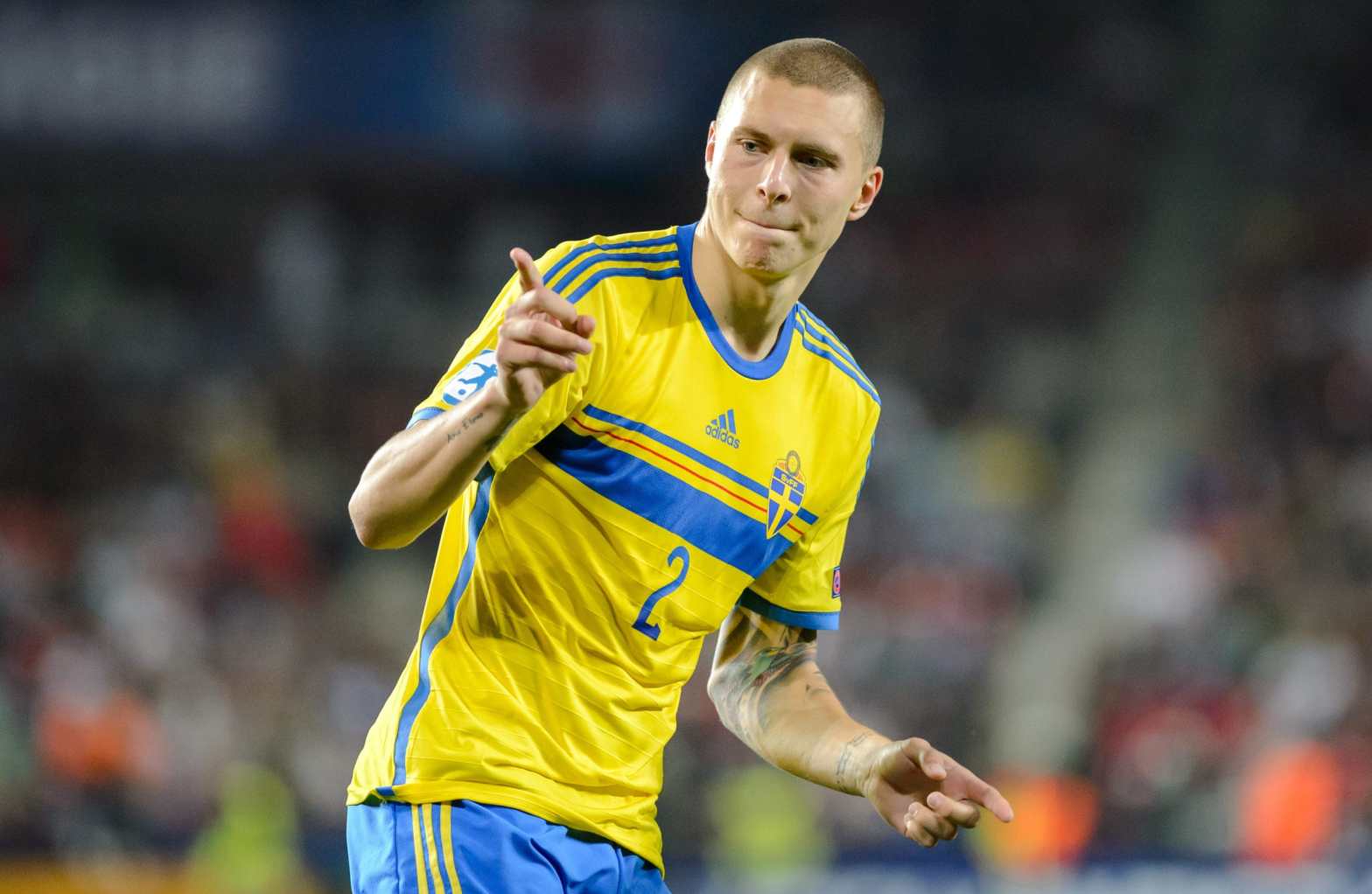
In the picture: Interestingly, the now Manchester United’s Victor Lindelöf only travelled to the 2015 Euro U21 tournament as a makeshift right-back for the injured Emil Krafth
Design a site like this with WordPress.com
Get started