I have analysed the under-21 European Championships last five winning squads.
KEY FINDINGS:
- Two of the 2019 edition winners started Spain’s first 2022 World Cup qualifying game against Greece, with further two making the matchday squad.
- Serge Gnabry is the only 2017 edition winner who was called up to the Germany senior squad at the start of the 2022 World Cup qualifying campaign.
- Four of the 2015 edition winners started Sweden’s first 2022 World Cup qualifying encounter against Georgia, with another one coming off the bench.
- The 2013 edition winners include the likes of David de Gea, Iñigo Martínez, Dani Carvajal, Koke, Thiago Alcântara, Sergio Canales, Isco and Álvaro Morata.
- Among the 2011 edition winners are César Azpilicueta, Javi Martínez, Juan Mata, David de Gea and Thiago Alcântara, but also the likes of Bojan Krkić and Diego Capel.
Spain 2019
Every single player of the 23-man Spanish squad that triumphed in Italy less than two years ago is now with a top-flight club, home or abroad. However, a lot of them have rather struggled to make a significant impact in senior football. Dani Olmo and Mikel Oyarzabal are the most obvious success stories with Fabián Ruiz and Mikel Merino having also progressed to the seniors.
However, Dani Ceballos has been inconsistent on loan at Arsenal while Pablo Fornals has hardly taken the Premier League by storm, to say the least, since his big-money move to West Ham. Jesús Vallejo, Unai Núñez and Martín Aguirregabiria, who all started the 2-1 final victory over Germany back in 2019, have neither cemented their places at La Liga level. Meanwhile, Junior Firpo and Marc Roca are only squad players at Barcelona and Bayern Munich respectively.
Things look a bit brighter up front, with both Borja Mayoral and Rafa Mir having recently put on their goalscoring boots on their respective loans at Roma and Huesca. Perhaps the biggest winner of the 2019 Spanish crop is goalkeeper Unai Simón, though. The Athletic Bilbao shot-stopper has rather surprisingly displaced both David de Gea and Kepa Arrizabalga in Luis Enrique’s senior side despite having been understudy to Deportivo Alavés Antonio Sivera at youth level. The latter has not yet made a league appearances this season.
Germany 2017
All but two players of the 23-man Germany squad that triumphed in Poland less than four years ago are now with a top-flight club, home or abroad. However, only Club World Cup winner Serge Gnabry is currently a senior international, even though Paris Saint-Germain’s Thilo Kehrer, who did not play in the 1-0 final victory over Spain back in 2017, would have been in contention for the latest squad list had he not been injured.
Others have endured rather mixed fortunes. Maximilian Arnold has done well at high-flying Wolfsburg this season. Nadiem Amiri has impressed, although perhaps not consistently enough, at Bayer Leverkusen. Marc Oliver-Kempf is an important part of the revelation-package VfB Stuttgart. Mahmoud Dahoud, like Amiri, has even progressed into the seniors despite having not really won a starting berth at Borussia Dortmund.
On the other hand, Max Meyer is back in the Bundesliga with Cologne after a hugely disappointing spell at Crystal Palace. Maximilian Philipp has not really found his goalscoring form since 2017. Finally, the then match winner Mitchel Weiser is now usually a substitute at Leverkusen.
Sweden 2015
Perhaps not Spain – the ridiculously talented age group below, aside – nor Germany, but the Swedish under-21 European Champions have been the biggest success story of late. Proof?
Compare two defensive back four.
Augustinsson – Helander – Milošević – Lindelöf
Above is the one that started, and kept a clean sheet, Sweden’s final victory over Portugal in Czech Republic back in 2015. Below is the one that started Sweden’s first 2022 World Cup qualifying game against Georgia earlier this week.
Augustinsson – Helander – Lindelöf – Lustig
And that’s not all.
Kristoffer Olsson, who was the youngest player in the 2015 travelling squad and did not play in the final, was also on the pitch from the start against Georgia while Robin Quaison came off the bench in the second half, as he did less than six years ago for under-21s against Portugal.
In fact, even if you expected more from star striker John Guidetti in recent years, every single Sweden player that began the U21 final back in 2015, has since made at least one appearance for the seniors.
Spain 2013
If Sweden’s 2015 triumph was not a fluke then, the title Spain won two years earlier certainly was not one either. No less than 17 out of 23 Spanish players who travelled to Israel back in 2013 went on to win at least one senior cap.
David de Gea, Iñigo Martínez, Thiago – who scored a hat-trick in the 4-2 final victory over Italy – Koke and Álvaro Morata are full internationals to this day while Sergio Canales has also earned himself a place in the side under Luis Enrique.
There is also a sad thing about this group, however. Midfielder Nacho Camacho, who came off the bench in the final, was forced to retire from football at the age of 30 last year due to persistent injury problems.
Spain 2011
Ander Herrera and Thiago were on target when Spain saw off Switzerland in the 2011 final in Denmark. David de Gea, Javi Martínez, Juan Mata, Iker Muniain and Dani Parejo were also on the pitch. As, however, were Alberto Botía (now at Saudi Arabian Al Wehda), Jeffrén (currently at Al Dhaid in UAE), Diego Capel (recently a free agent) and Álvaro Domínguez (retired back in 2016).
Curiously, both César Azpilicueta (now captain of Chelsea) and Bojan Krkić (like Capel, currently a free agent) did not play in that final.
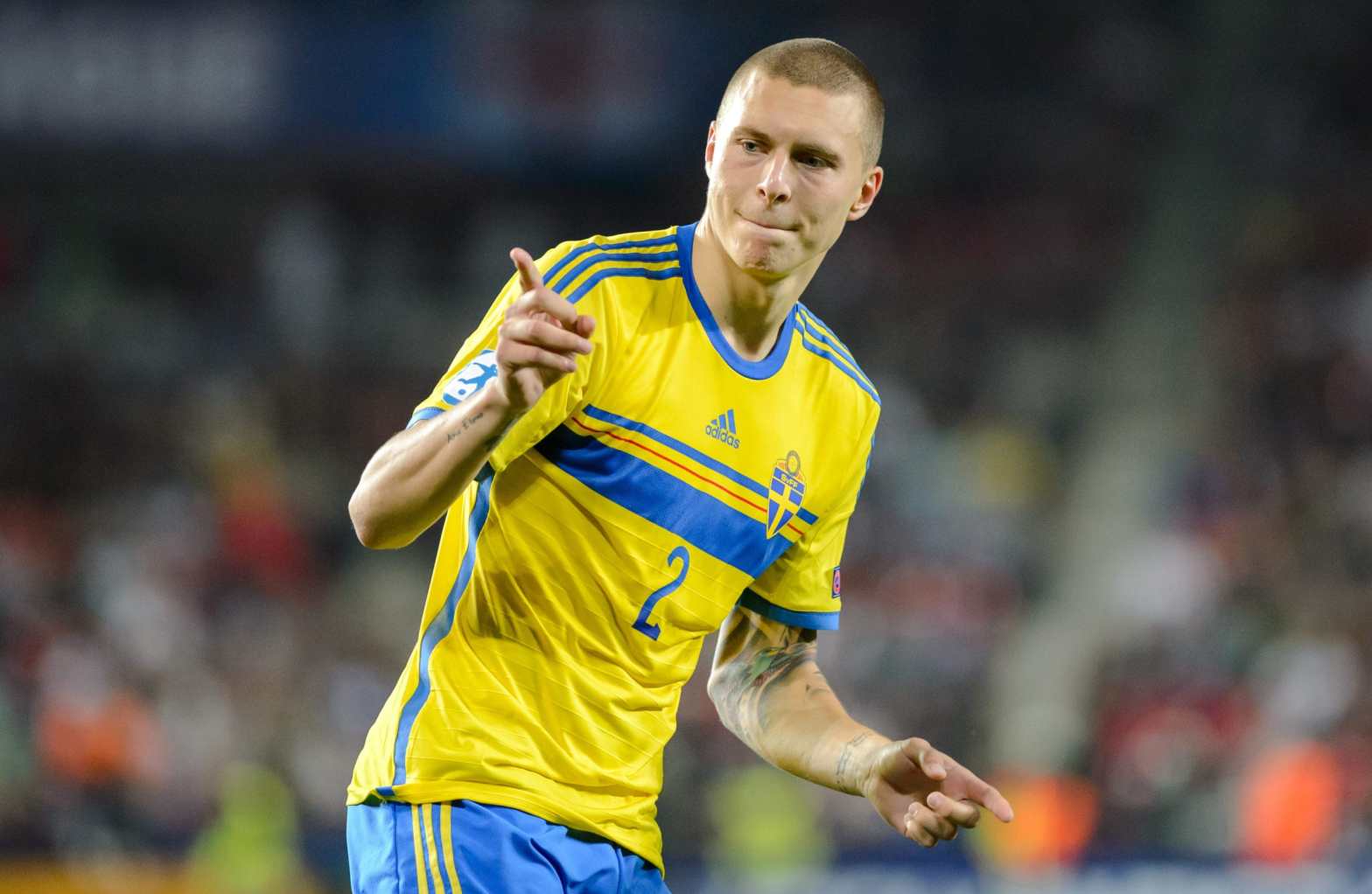
In the picture: Interestingly, the now Manchester United’s Victor Lindelöf only travelled to the 2015 Euro U21 tournament as a makeshift right-back for the injured Emil Krafth
 BREAKTHROUGH