Europe’s largest football club, with 260 teams and over 4 000 players.
At first thought, when quizzed about the country boasting THE biggest football club in Europe, one of England, Germany, Italy and Spain may naturally come to mind.
If you ever travelled to Scandinavia though – I did once, only to be blown away by the sheer number of full-sized, natural-grass pitches in the not-particularly-big Danish city of Esbjerg – you may think of a different answer.
(After all, you need A LOT of facilities across a not-too-distant area to be able to put many training groups together; a luxury not often to be seen in congested cities of Western Europe.)
Perhaps then it should come as no surprise to learn that the biggest football club in Europe can be found in Sweden.
‘PROPER’ YOUTH PRODUCTS
Idrottsföreningen (IF) Brommapojkarna are currently a third-tier club, having recently suffered two consecutive relegations that followed two consecutive promotions under the guidance of former Aston Villa and Juventus defender Olof Mellberg.
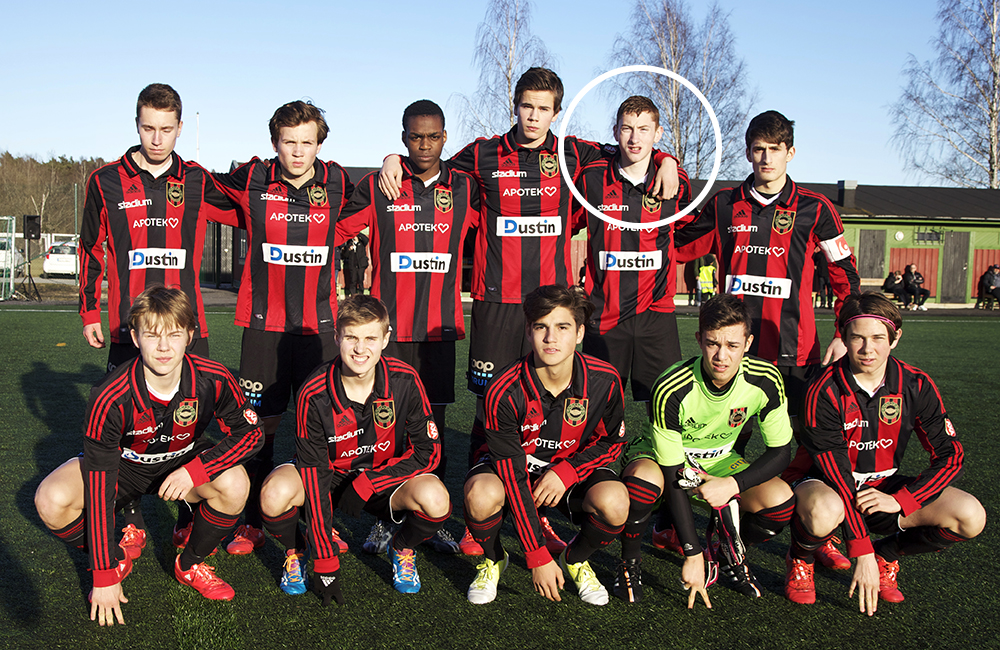
Located in the borough of Bromma in the western part of Stockholm, Brommapojkarna are – and have been for some time – regarded as Europe’s largest football club, with 260 teams and over 4 000 players.
Where there are big numbers, quality tends to follow.
Sweden under-21 European Champions John Guidetti and Ludwig Augustinsson as well as Dejan Kulusevski and Amiens striker Jack Lahne are just some of the club’s youth products and ‘proper‘ ones too, having all joined Brommapojkarna in their early childhood.
(Meanwhile, their women’s team are also the biggest female football club in the world, with over 1 000 players.)
CONTRAST APPROACHES
Not much information about the club can be found in foreign media.
However, Brommapojkarna have been subject to a lot of publicity in their homeland.
There seems to be a stark contrast of approaches to youth development between the currently third-tier club and their city rivals, 12-time Swedish Champions – AIK.
AIK – boasting a big football academy themselves, with over 1 500 players between the age of 8 and 19 – have recently gained international recognition after deciding to resign from any selection processes at the equivalent of foundation phase level at their academy. And even beyond.
At AIK, children themselves decide how many times a week they want to train football.
“The kids make the decision every year, not us, not the adults”, AIK’s head of youth development, Irishman Mark O’Sullivan has explained.
“[Early selection] isn’t foisted upon them. So it’s their decision, their motivation.
“We’re not taking away their autonomy. The idea that a young kid should have to quit other sports because otherwise they won’t be good at football is dinosaur-age thinking.”
Meanwhile at Brommapojkarna, things seem to be a lot more common or even old school, as some may argue. To say the least.
Children are put into training groups according to the level of their ability very early. The competition is fierce. The club’s domestic reputation is notorious, also because of their parent culture, which the club themselves have reportedly acknowledged.
“I used to play for Brommapojkarna between the age of 12-15”, one internet user has commented.
“It was very intense and lead me to quitting football altogether.”
The emerging debate – and process of change – right across the Swedish capital is probably only just about starting.
In the picture: Dejan Kulusevski (circled) back in his playing days at IF Brommapojkarna (found here)
 BREAKTHROUGH